Background on Church Buildings for Collaborative Partnerships.
St. Timothy’s Episcopal Church members from all parts of the parish leadership ecology have developed a plan to alter and adapt the buildings’ structures and the congregation’s activities to welcome people from all over the community. This is a focused and precise programmatic plan that has definite beginnings and which is operational now in 2026. It is a living plan.
On Thursday, March 31, 2022, several groups toured St. Timothy’s buildings to advise leaders how to engage in self-study and design a community involvement program. The visitors included folks from the Church Buildings for Collaborative Partnerships program office, the diocesan staff, and congregational leaders. The link to more information is at the top of this page.
The Church Buildings for Collaborative Partnerships staff took measurements with tape measurers and generated a background assessment of how our buildings were serving us and serving the wider community.
This activity helped us understand how our congregation could plan for long-term viability — both as stewards of state and national historic registry properties, and as faithful followers of Jesus Christ. Before this Church Buildings for Collaborative Partnerships work began, the congregation worked with leaders from the diocesan staff and preservation experts to place the church’s buildings on the National Register of Historic Places (Dec. 2, 2020) and on the Indiana Register of Historic Sites and Structures (Oct. 21, 2020).
On Feb. 27, 2025, the congregation’s CBCP team welcomed a group of 25 people, mostly composed of community interest groups, to study and advise us about what our building represents to the community. Crucially they looked at what the buildings say about the congregation and what the buildings represent potentially to the community. The people ideated scenarios where the groups they lead could use the St. Timothy’s buildings and grounds. There was a lot of joy and some heart-tugging moments as leaders in the community spoke of the kindness and hospitality they believed existed at St. Timothy’s. This meeting was facilitated by Sacred Places program staff.
The community members saw much potential. The staff from Partners for Sacred Places, which operationalized the CBCP program at St.Timothys, generated a report to the CBCP team that took the ideas from community visitors and fleshed out how the congregation could generate sustaining collaborations from within the wider community. That report is here.
The next steps have included a successful implementation of the Sacred Places report, in which the CBCP team developed the likeliest most successful building alterations that would meet criteria for a $100,000 matching grant from the CBCP Phase Two program. The grant matches $50,000 from the Partners for Sacred Places/Indiana Landmarks partnership and $50,000 from St. Timothy’s. St. Timothy’s leaders approved this plan and received word in February 2026 that the congregation has received this grant.
In the intervening period during the winter of 2025/2026, the CBCP team, the property commission, the vestry and other congregation leaders, met frequently to discern how to deploy the grant money, how to gather and deploy financial treasure from the congregation, and how to implement a building program.
The building program includes (as resources become viable, visible and possible) plans, which are (April 2026) being bid by contractors who propose costs to complete these projects:
- repair sewer pipe inside the building; pipes from existing bathrooms were renewed with CIPP (cured in place pipe) to repair the main sewer pipe on Thursday and Friday, April 16 and 17,2026, by contractor NuFlow
- repair/replace flooring in the children’s classrooms
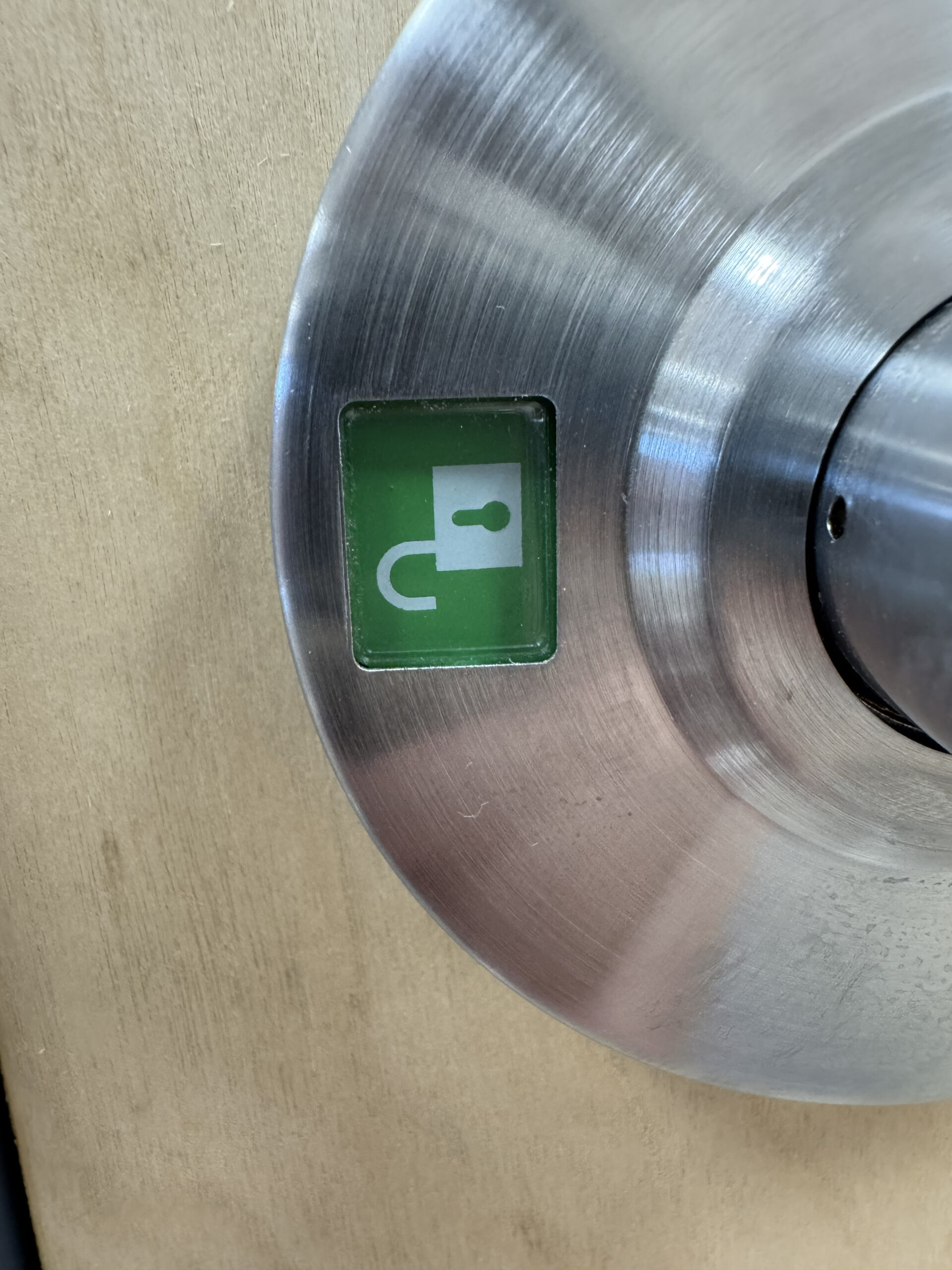
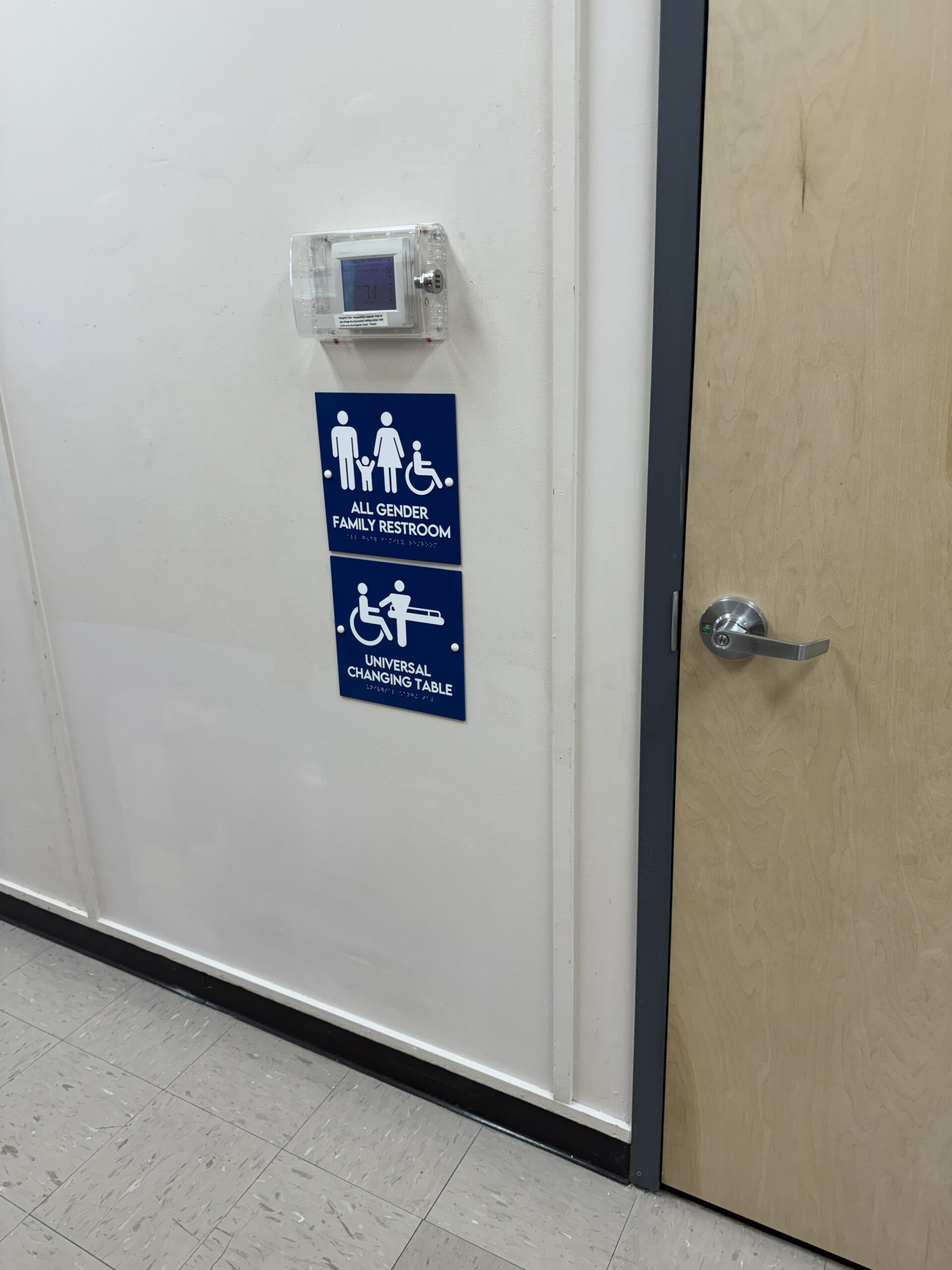
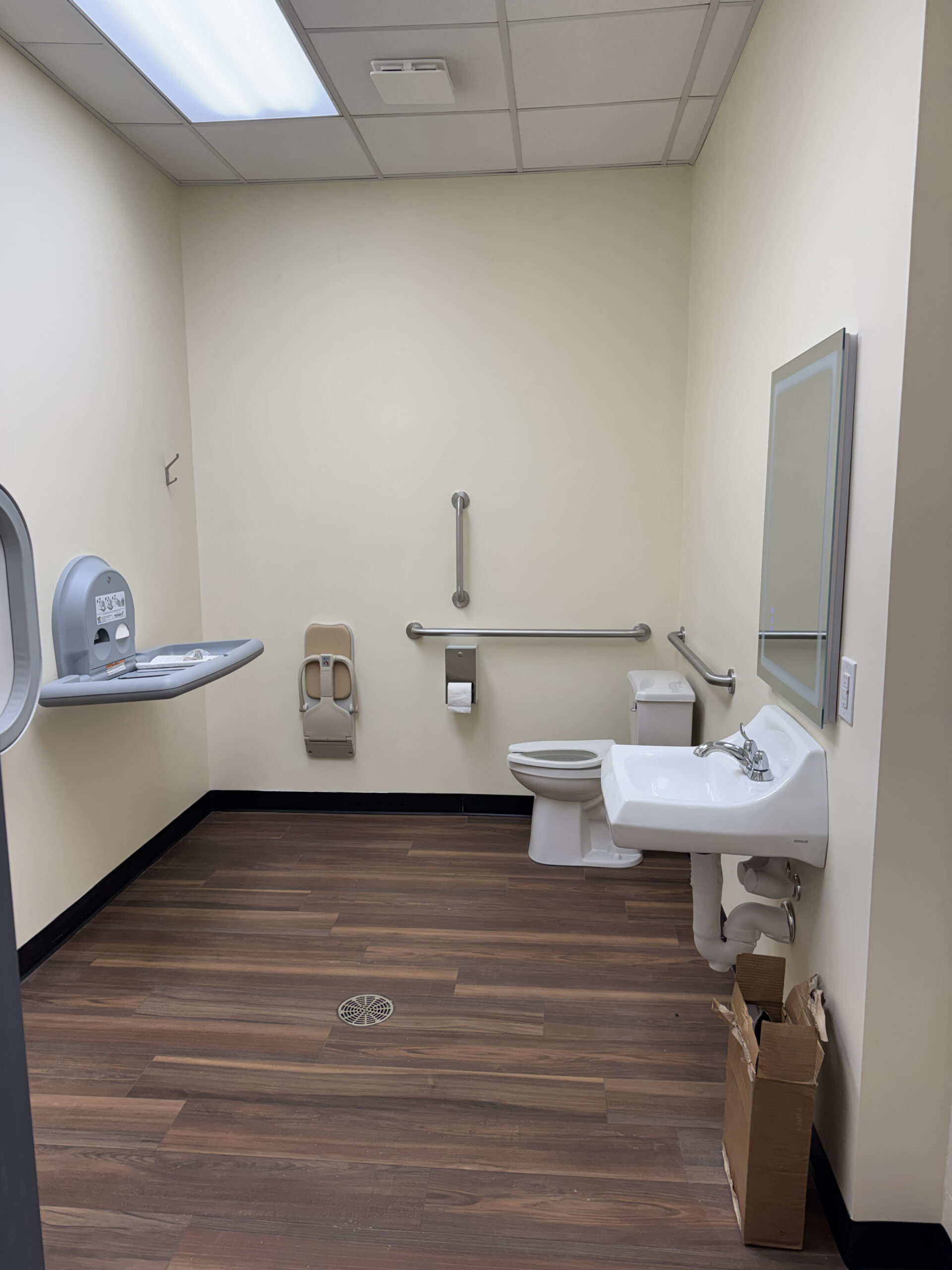
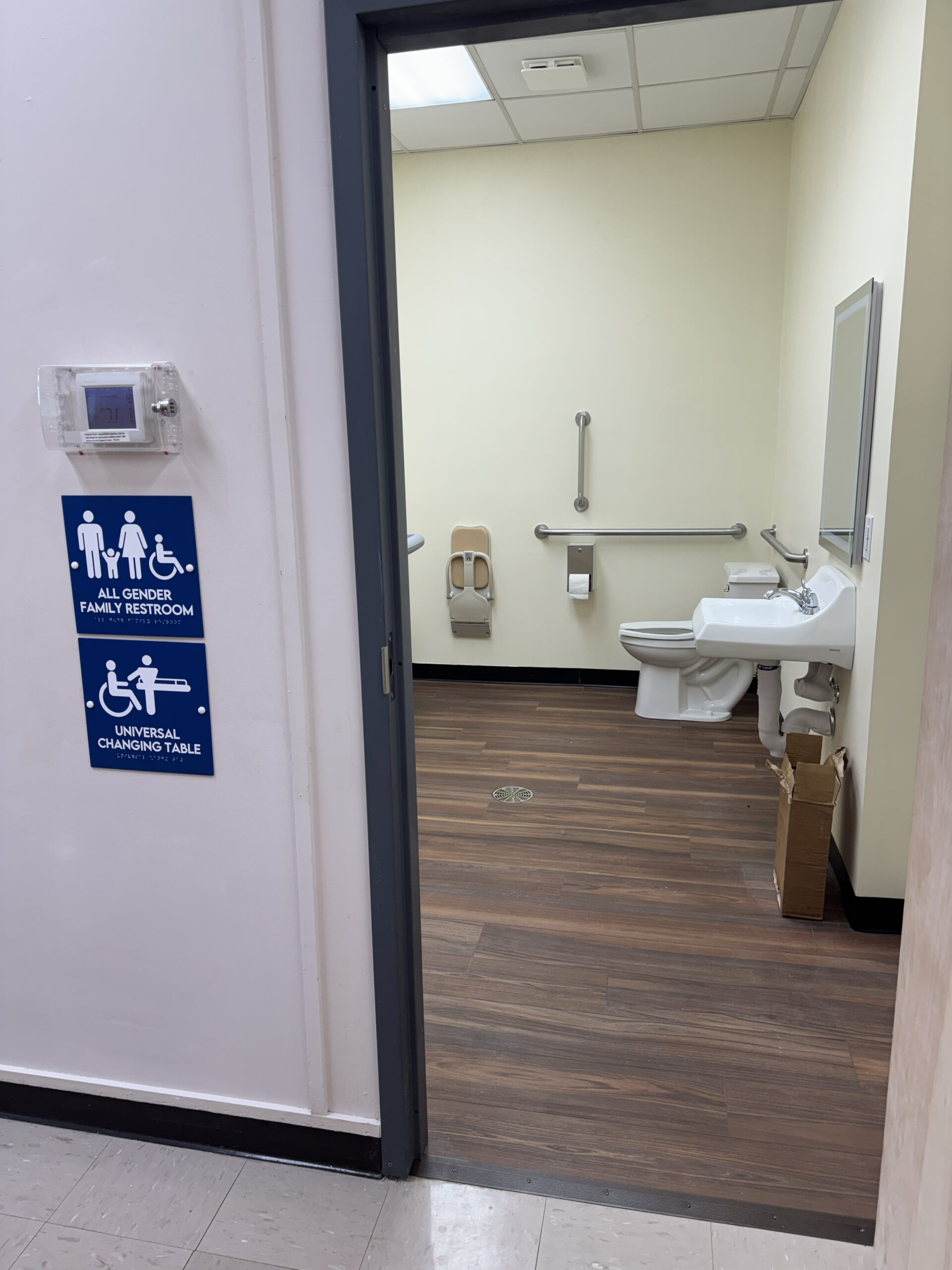
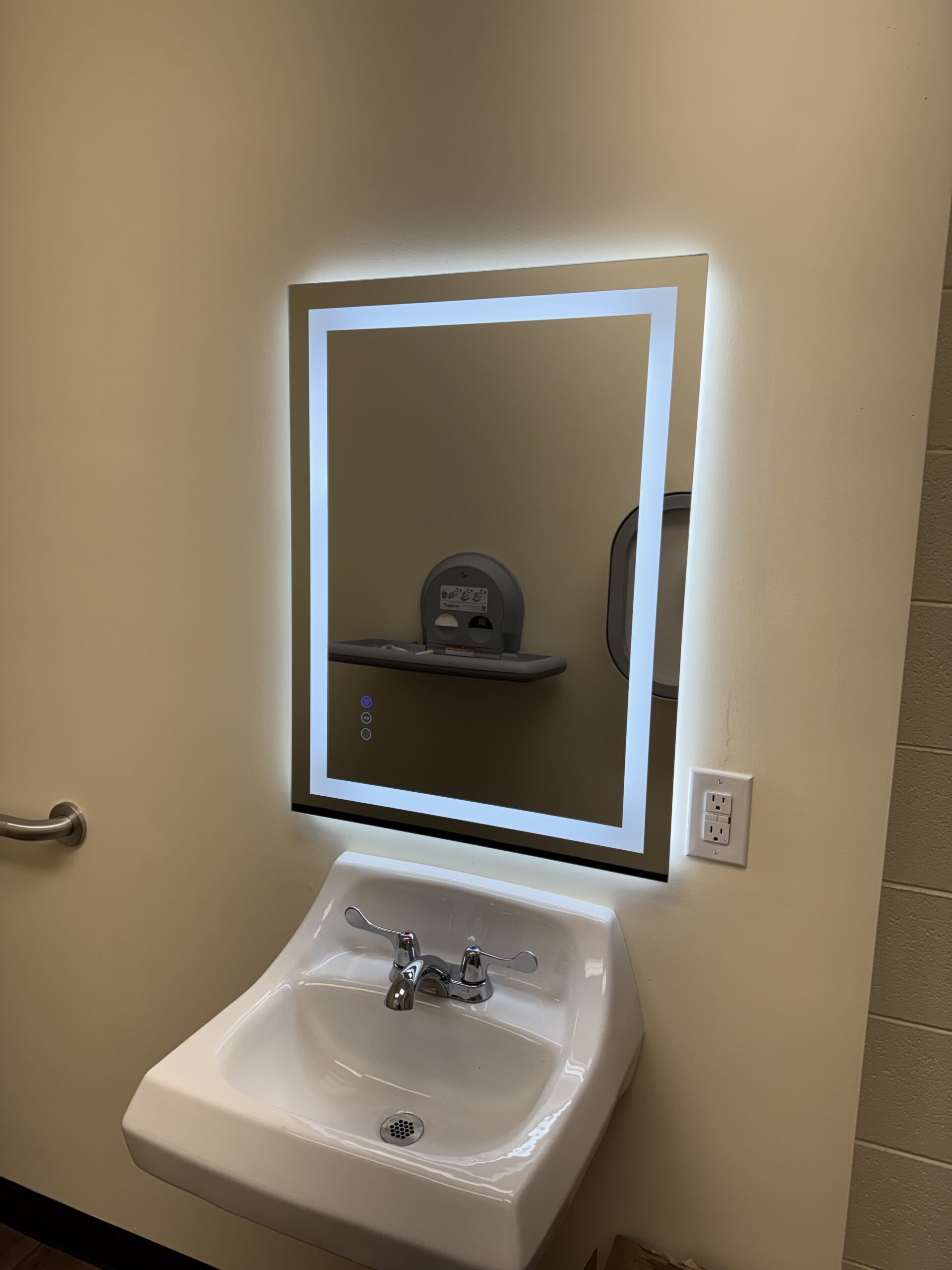
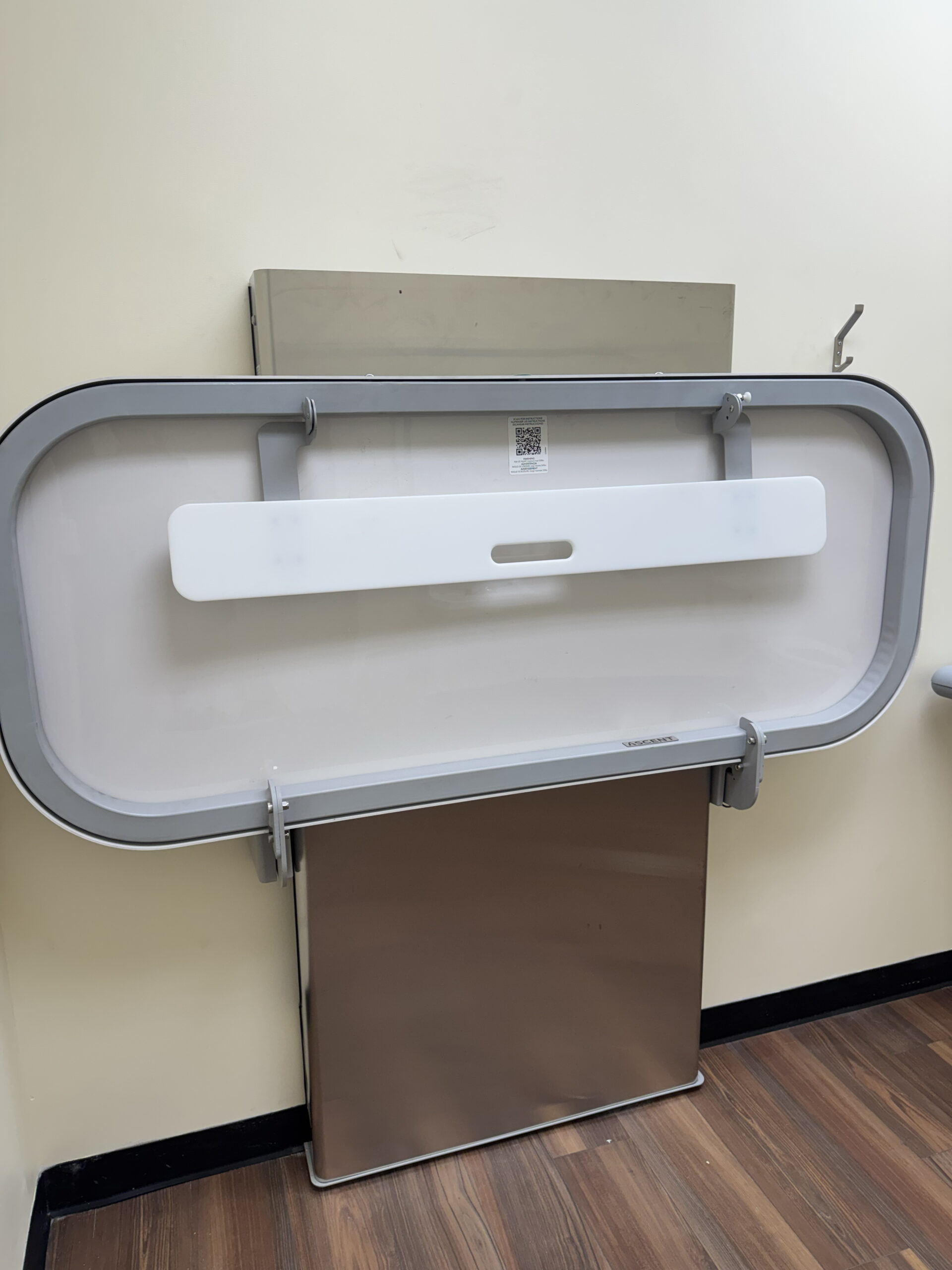
- add a single-user/all-user bathroom with changing station robust enough for both children and adults and to include a baby-in-waiting capability to allow parents to bring a child into the room with them; this facility will include fixtures for going and cleaning and be accessible for people using wheelchairs and all others
- repair flooring and remove a partial wall in the children’s classrooms
- upgrade electrical and plumbing capacity for the new bathroom
- upgrade electrical and plumbing for the kitchen to add a power food disposal and dishwasher appliance
- create a portico over the south parking lot entrance to allow drop off of patrons out of the weather
- addition of an outdoor worship space proposed by the parish’s youth
Why so much construction activity? The CPCP team created a plan for improving/creating areas that would serve the community. This shows fidelity to ways in which the community asset mapping participants in 2025 suggested we can welcome others to use our building.
St. Timothy’s believes its ethos allows for radical hospitality. The congregation’s mission statement is Jesus Feeds, We Feast, We Feed Others.
St.Timothy’s believes the Holy Spirit leads us.
Our previous efforts to care for the community have resulted in a project to pay for (and benefit the entire neighborhood) a mandated corrected sewer hookup to the municipal sewer system to eliminate potential combined stormwater and sewage overflow. St. Tim’s buildings were relying on septic systems that were from the original construction in the 1960s. Many homes and other buildings in the neighborhood had similar issues. But the sewer hookups, besides being expensive, were potentially economically impossible for some property owners. Elevation of drainage topography in the neighborhood requires sewage to flow uphill. The mechanical system cost more than $10,000 and would have been billed to neighbors. St. Timothy’s paid that cost for the community.
In the previous decades — especially in the past 30 years — the 100-year flood level has been exceeded several times. Water coming from the neighborhoods above St. Timothy’s drained into ditches nearby resulting in catastrophic flooding for a mobile home community downstream to the north of the church’s buildings.
To remedy this neighborhood-wide issue, St. Timothy’s sold approximately 30 percent of its land from an unused parcel to the city in late 2024. Read more about the incredible stewardship here. The city installed a remediation project to detain water.
In September 2026, the congregation received incredible news from its grant writers on the financial, buildings and outreach committees, regarding funded matching grants.
Read this note from Chris Kramer (below the video screen) from the Sept. 28, 2026, worship announcement.
Or watch the video on Facebook. (Click below.)
“September 2026 BC2 Grant update
My second announcement is the monthly BC2 Accessibility Grant update and I am brimming full of thanks this month! In addition to our new ADA bathroom grant, we heard from Tim Kramer last Sunday, that St. Timothy’s was awarded another grant to replace our roof, which has lost many shingles to the strong winds of recent months. Between these two grants, St. Timothy’s has been given $150,000! We are so blessed! Thank you, God, and the Eli Lilly Foundation and Sacred Places Indiana and Indiana Landmarks for your incredible generosity!
It is important to understand that these are MATCHING grants and not just grants. The roof grant is given as a 2:1 match. So, we were given $100,000 for the roof, and St. Timothy’s is required by the grant guidelines to contribute $50,000 to cover the $150,000 that it will cost to replace the entire roof on the sanctuary, hallway, and education wing.
The new ADA restroom grant is given as a 1:1 match. So, we were given $50,000 and St. Timothy’s is required to contribute the other $50,000 to cover the $100,000 cost of construction of the bathroom, lining our old cast iron sewer pipes, and remodeling the space of the Godly Playroom to accommodate our new restroom.
The folks at Sacred Places Indiana and Indiana Landmarks have deemed St. Timothy’s Church to be a church that is worthy of investing in. They are trusting that by supporting both our Accessibility and Roof grants that we, as a congregation, will continue to be a thriving body of believers, serving both its own members and the wider community who will be using our building.
Come this November, we will each have the opportunity to give financial support toward the $50,000 match portions of the ADA restroom and roof grants during our yearly Pledge Drive. Already, even ahead of our Pledge Season, our congregation has responded generously. $21,000 has been pledged to help pay for the ADA bathroom not counting the proceeds from the Spaghetti Dinner Fundraiser! Thank you so much to Scott and Lorie Trauscht and all who participated in making this event a huge success! For the roof match, $27,000 has already been generously contributed by St. Timothy’s members and $8,000 from a community member bring the roof grant total matching funds to $35,000 to date.
In addition to financial gifts, other donations have been given along the way. The new plumbing of the ADA bathroom afforded an opportunity to install a garbage disposal and dishwasher in our kitchen, and these appliances were generously donated by members of St. Timothy’s; as was the Universal Changing Station in our new restroom. Parishioners Steve Alexander, Diane Griner and Rick Cuneen donated their painting and picture-hanging skills in the renovated Godly Playroom. The entire Formo family and Miz and his sisters and Jennifer Lutz gave many hours of effort to move the entire contents of the Godly Playroom out and back in again along with a huge reorganization. Thank you! Steve Polston, you have meticulously documented our grant work on our website making it available for all to see. Tim Nickson has provided invaluable support through his leadership. Thank you! And I would be remiss not to thank Becky Edwards by name, for her generous donation of time and energy to so thoroughly clean both during and after the construction of our ADA restroom and Godly Playroom renovation. Thank you so much, Becky! You are a shining star at St. Tim’s, consistently maintaining our building a sparkling clean and welcoming place!
As we are entering the season of Autumn and Thanksgiving, I am filled with gratitude for the gifts we’ve been given here at St. Timothy’s in the form of the Accessibility and Roof grants. But most of all, I am thankful that we, as a small congregation, are people who give so generously of their time, talents, and treasure to make St. Timothy’s the welcoming house of worship and community gathering space that it is.
Thanks so much!”
Accessible bathroom images.